Press release —
New report: Tin mining traps communities in a cycle of vulnerability as corporate oversight falls short
The Bangka Belitung Islands in Indonesia supply around one-fifth of the world's tin, a metal used in solar panels, electric vehicles and other electronics that underpin the green transition. A new report reveals the high hidden costs: degraded ecosystems, destroyed livelihoods and children drawn into hazardous work, often in illegal mining operations. As mining expands further into coastal waters amid growing global demand, the report raises questions about how global companies sourcing tin fulfil their responsibilities.
In the report Critical for Whom? Tin Mining, Human Rights and the Green Transition in Indonesia, Swedwatch, together with the Swedish Society for Nature Conservation and the Indonesian environmental organisation WALHI, examines the impacts of onshore and offshore tin mining on communities and the environment. The findings draw on on-site research in the Bangka Belitung Islands, including interviews with affected communities and visits to mining sites on land and at sea.
Environmental destruction fuels a cycle of vulnerability
Global demand for minerals used in the green transition is expected to grow significantly in the coming years, adding to the pressure on mineral-producing regions such as Bangka Belitung.
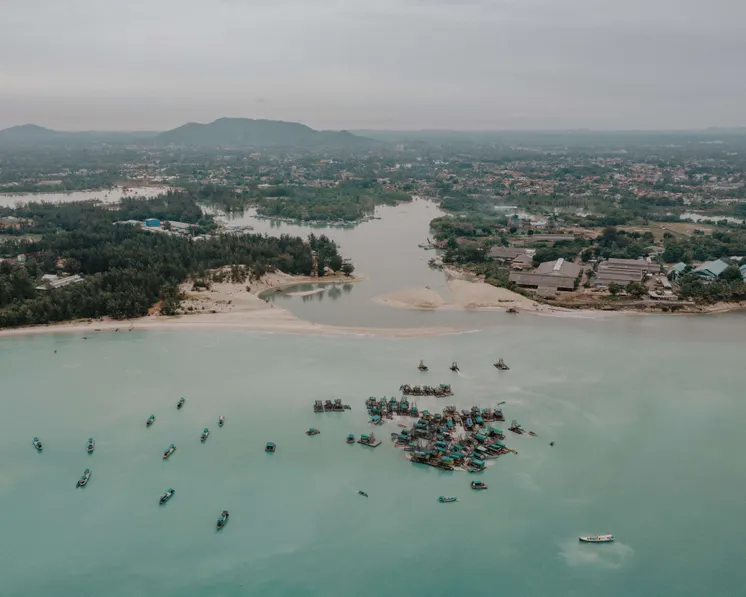
Tin mining on the islands has increasingly shifted from land to sea, with devastating environmental consequences. Seabed dredging smothers coral reefs and seagrass meadows, damaging vital marine ecosystems. The loss of traditional fishing grounds and declining fish catches have severely affected coastal communities' livelihoods and food security.
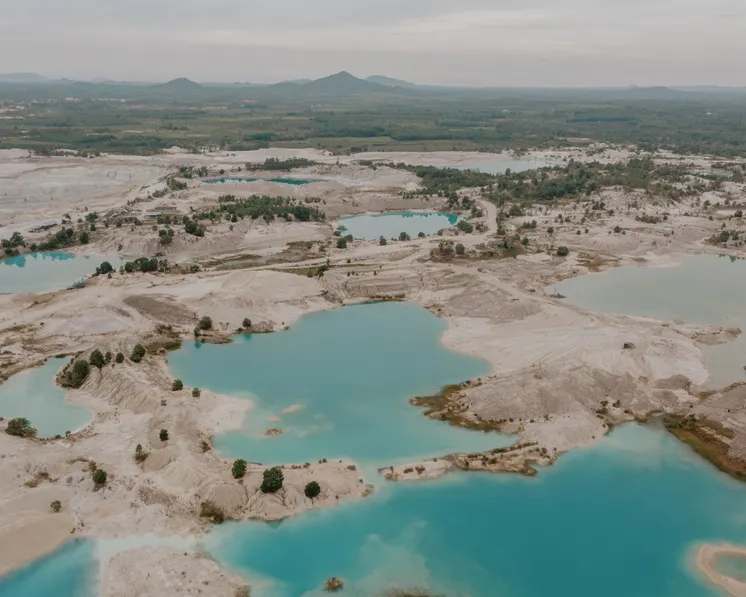
- The expansion of tin mining from mainland areas to coastal and marine territories across the Bangka Belitung Islands has left behind an increasingly severe ecological crisis, ranging from 12,607 abandoned mining pits to the destruction of coastal and marine ecosystems that sustain local communities, says Ahmad Subhan Hafiz, Executive Director of WALHI Bangka Belitung.
Affected communities report having little influence over mining decisions affecting their land, coastal waters and livelihoods, with permits often issued without meaningful consultation. Communities also describe how mining divides villages, setting those who support and oppose mining against one another.
- The green transition is essential, but it must not come at the expense of people and the environment in the countries where minerals are extracted. Ensuring a just transition requires both reduced resource use and a strong regulatory framework that requires companies to take responsibility throughout their value chains, says Marja Wolpher at the Swedish Society for Nature Conservation.
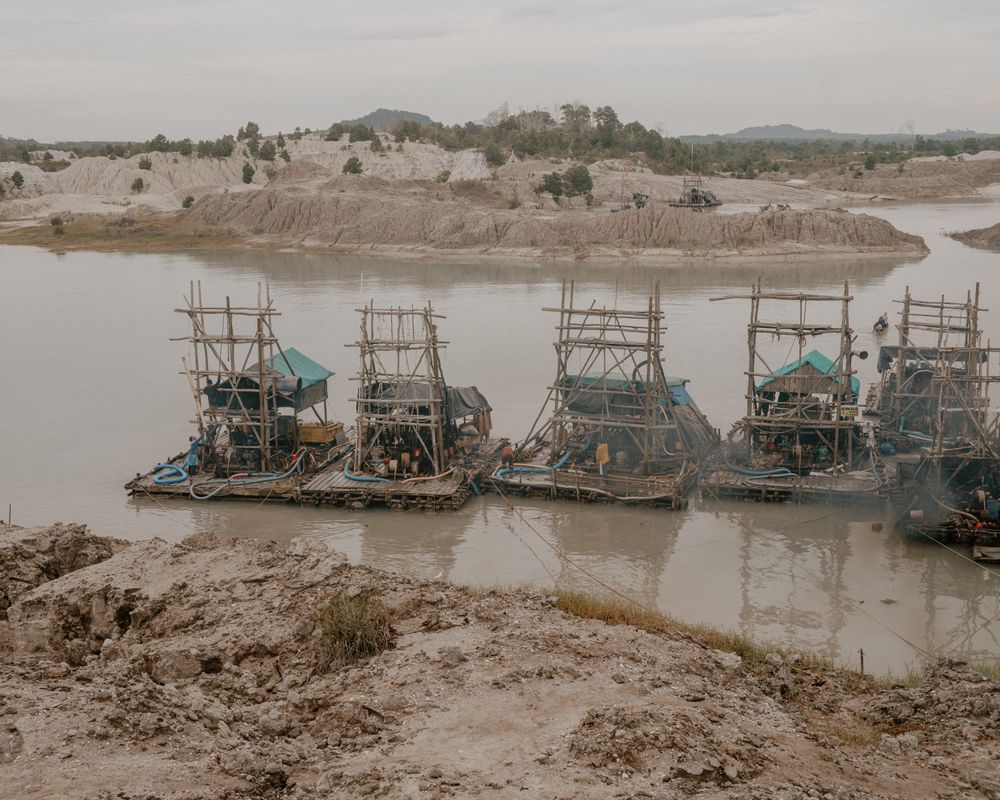
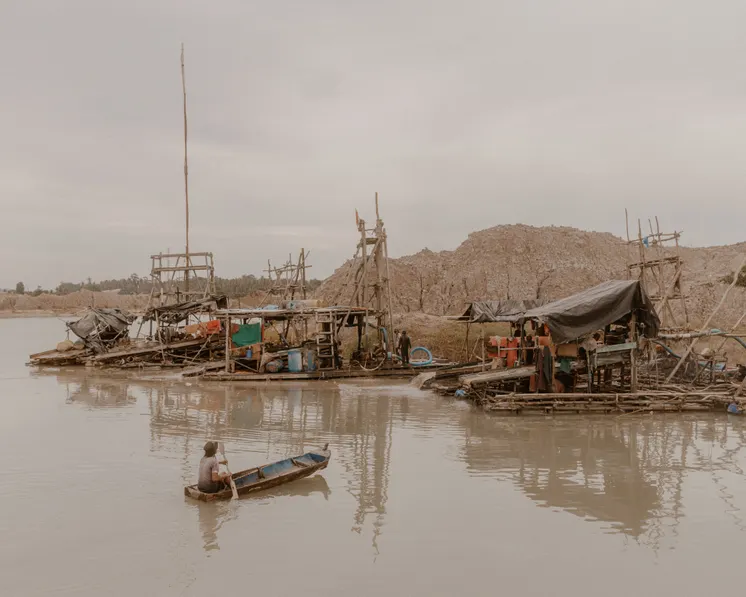
Pontoons on shore at one of the many mining pits on Bangka Belitung. Miners wash the sediment to separate the heavier
tin ore from the lighter sand. Photo: Muhammed Fadli for Swedwatch
From hazardous working conditions to child labour and sexual harassment
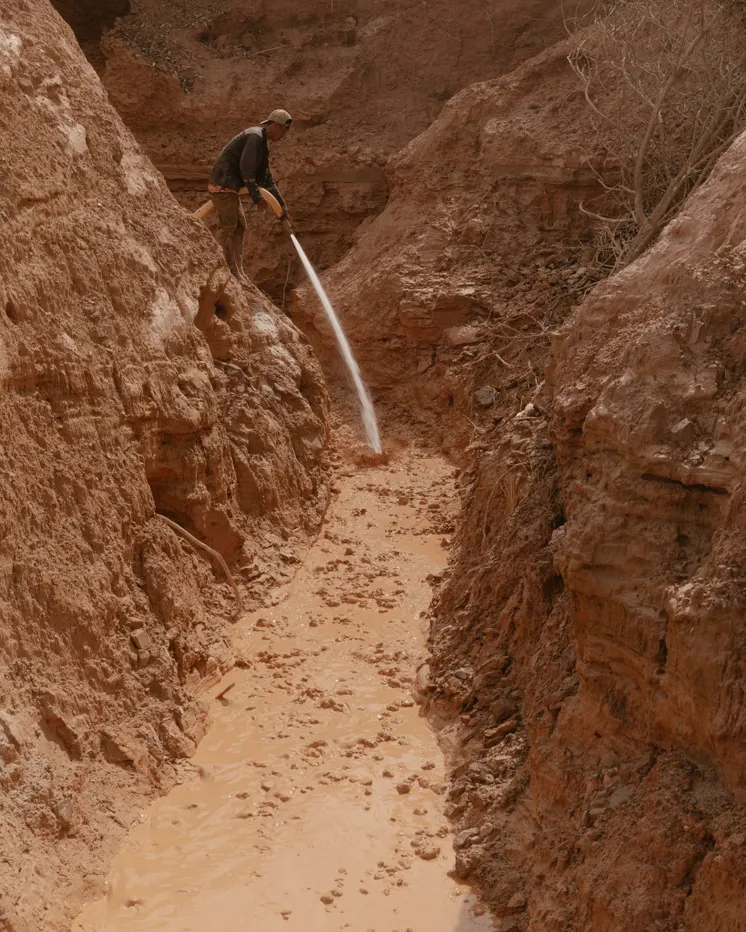
Tin mining is hard and hazardous work. Workers face serious risks, including collapsing mine walls, dangerous machinery, while lacking adequate protective equipment. Shifts can be grueling, and interviewees described widespread use of methamphetamine among miners to combat fatigue, particularly offshore. Extensive illegal mining, both on land and offshore, further increases these risks while undermining oversight and traceability, as legally and illegally mined tin has reportedly been mixed at smelters.
The research also highlights the persistent problem of child labour. As alternative livelihoods disappear, families increasingly rely on their children working in mines, with some leaving school altogether. Girls and young women face additional risks, including sexual harassment and exploitation around mining sites. Some are trafficked to the islands with false promises of work.
Global companies linked to the region's tin industry
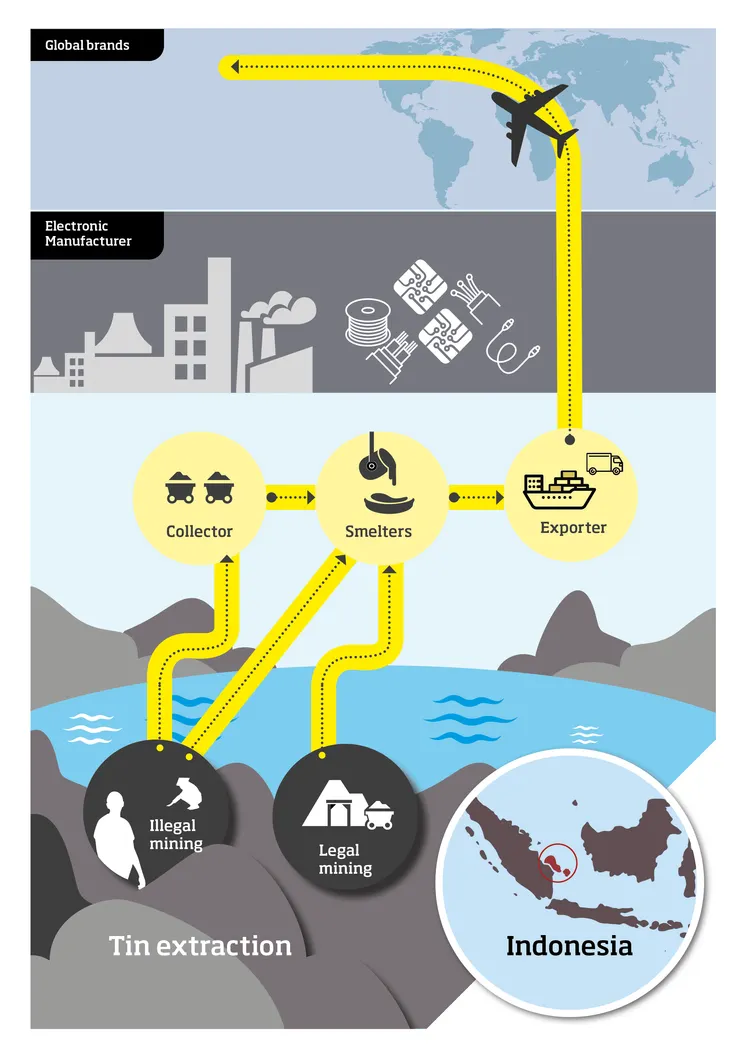
Tin mined on land and offshore in Bangka Belitung enters international supply chains through collectors, traders, smelters and refiners. Using publicly disclosed smelter and refinery lists, Swedwatch identified links between the region's tin industry and the supply chains of Ericsson, Apple, Tesla and Volkswagen Group.
All four companies were contacted about their human rights and environmental due diligence. Only Ericsson engaged with Swedwatch during research, acknowledging difficulties in tracing tin to individual mines and stating that they would take appropriate action where credible evidence linked suppliers or smelters in its supply chain to serious harm. Their full response is available at Swedwatch’s website.
Key recommendations: From supply chain checks to action on the ground
The report calls on companies to identify, prevent and mitigate the impacts of mining throughout their supply chains. This responsibility extends beyond direct suppliers to include smelters and mining operations, with particular attention to the complex risks of offshore mining.
Companies must investigate conditions at mining sites and listen to affected communities, rather than relying solely on industry reports and certification schemes. Child labour, violence against women, environmental destruction and loss of livelihoods must be addressed, and companies must ensure that harm is remedied.
Investors also have a responsibility to act. They should use their influence to ensure that companies investigate risks and take concrete steps to prevent and address harm.
- Companies cannot simply check their direct suppliers or rely on certifications. They must understand the consequences of on and off-shore mining by listening to affected communities, and take action when their supply chains are linked to harms. A green transition and everyday electronics built on child labour and destruction of ecosystems is neither sustainable nor just, says Sofia Käll at Swedwatch.
Further recommendations for companies, investors and policymakers are detailed in the report.
Additional facts
The Bangka Belitung Islands
The two islands just off Sumatra's coast are the epicenter of Indonesia’s tin mining and a vital contributor to the global tin industry. Indonesia is ranked the second-largest supplier after China and supplies one-fifth of the world’s total production. Bangka Belitung alone contributes 90–95 percent of the production.
About the research
On-site research was conducted by Swedwatch and WALHI in Bangka Belitung in November 2025, including site visits, focus group discussions and interviews with community members and experts. The research was complemented by a review of secondary sources and outreach to four companies linked to the region’s tin supply chains. A simplified map of the tin value chain from Bangka Belitung, Indonesia, to global markets is provided below. Photos were taken by Indonesian photographer Muhammed Fadli, who also has produced a short film together with Swedwatch.
Related research: Nickel mining & investor responsibility
Nickel is another key mineral for the green transition, particularly for electric vehicle batteries, with Indonesia accounting for roughly 60% of global production. In September 2026, Swedwatch, the Swedish Society for Nature Conservation and Source International released a briefing on environmental and social concerns linked to nickel mining and refining operations in Sulawesi. The briefing highlights adverse impacts and the role and responsibilities of investors in addressing them.
Topics
Safeguarding human rights and environment in business
Swedwatch is an independent, non-profit research organization dedicated to promoting responsible business practices and empowering rights holders. We achieve this by exposing the human and environmental impacts of unsustainable business operations and fostering collaboration between stakeholders to drive meaningful change.