Press release —
New EU procurement rules need stronger safeguards for workers and communities
The European Commission’s proposal for a new EU Public Procurement Act, released today, takes promising steps on sustainability. But Swedwatch warns that its impact on workers and communities in public-sector supply chains will ultimately depend on whether human rights and environmental due diligence is firmly embedded in the final legislation.
The proposal moves away from lowest price as the predominant award criterion, giving public buyers greater scope to consider quality, including social and environmental factors. It also recognises working conditions in global supply chains as relevant to public contracts and takes steps to strengthen supply chain transparency.
However, it fails to introduce mandatory social conditionalities to promote fair working conditions and accountability throughout supply chains, and stops short of explicitly recommending human rights due diligence as a preferred award criterion or contract performance condition. Nor does it require public procurers to demand compliance with the Corporate Sustainability Due Diligence Directive (CSDDD).
-Without firm due diligence requirements, suppliers that cut corners on human rights may still win public contracts at the expense of more responsible competitors. Workers producing goods and delivering services for the public sector, as well as communities affected by suppliers’ activities, may therefore continue to face severe human rights violations, says Mathieu Vervynckt, Head of Unit, Supply Chains, Swedwatch.
Two decades of scrutinising public procurement
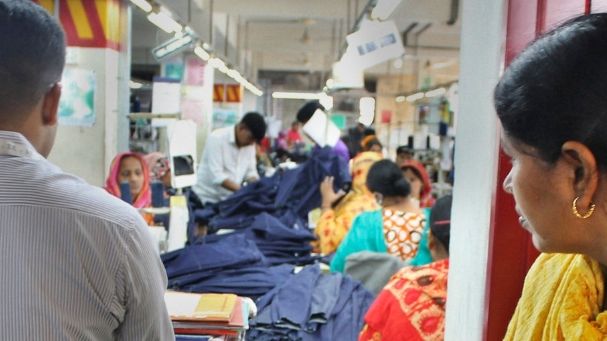
Swedwatch has long documented exploitative working conditions in public-sector supply chains. In its most recent study on the topic, Public Money, Private Harm, Swedwatch shows how public funds from EU Member States continue to support labour abuses in Pakistan’s textile factories, including factories supplying bed linen to Swedish hospitals. At the same time, Swedish contracting authorities demonstrate that due diligence can be integrated into public procurement without undermining competitiveness or limiting opportunities for small and medium-sized enterprises.
-The assumption that stronger human rights requirements would undermine Europe’s competitiveness doesn’t hold. Stronger requirements would prevent companies competing primarily on low prices from gaining an unfair advantage, while giving EU companies actively adjusting to emerging sustainability rules a natural competitive edge over their American or Chinese counterparts, says Sofia Käll, Programme Officer at Swedwatch and the head author of the report.
Social criteria must carry real weight
The proposed shift towards the best price-quality ratio from lowest-price procurement is a much-needed step. However, procurers are required to assign only 30% of the weighting to quality criteria, while a “comply or explain” approach would still allow lowest price to be used where justified. As quality can encompass many factors, social and environmental considerations risk becoming just one consideration among many – or being left out altogether.
In addition, while supply chain transparency is improved, the proposal fails to enable public authorities to consistently obtain information on working conditions at production sites, impacts on affected communities, and suppliers’ due diligence processes, including how they identify, prevent, mitigate and address human rights risks and impacts.
-Greater supply chain transparency is essential to ensuring that taxpayers’ money is spent ethically. There is broad political agreement that public money – our money – should not fund corruption or human trafficking. So why should we accept it perpetuating exploitative working conditions, destroying ecosystems or undermining community land rights? says Mathieu Vervynckt.
Legal clarity and practical tools needed
The Act should provide greater legal certainty for public buyers seeking to address supply-chain impacts. Human rights and environmental policies and supplier codes of conduct should be clearly recognised as linked to the subject matter of a contract, giving contracting authorities greater confidence to address risks further up the supply chain.
EU-level guidance and model contract clauses on due diligence are also needed. The experience of the Swedish Regions demonstrates the value of guidance and contract clauses proportionate to the risks associated with a contract and the maturity of a supplier’s due diligence process.
-Our experience shows that public procurers are ready to play their part in implementing stronger human rights requirements but often lack the legal clarity and capacity to act. EU policymakers should provide clear legal pathways and practical tools to ensure that taxpayers’ money does not contribute to human rights violations, says Sofia Käll.
As the proposal enters negotiations in the European Parliament and the Council of the EU, Swedwatch calls on policymakers to strengthen it by firmly embedding human rights and environmental due diligence – so that taxpayers’ money promotes decent work, protects human rights and rewards responsible business conduct.
Link to a longer analysis from Swedwatch about the proposal:
https://swedwatch.org/ul/does-the-proposed-eu-public-procurement-act-live-up-to-expectations/
Topics
Safeguarding human rights and environment in business
Swedwatch is an independent, non-profit research organization dedicated to promoting responsible business practices and empowering rights holders. We achieve this by exposing the human and environmental impacts of unsustainable business operations and fostering collaboration between stakeholders to drive meaningful change.