Press release —
Carbon credit project in Sierra Leone raises concerns over land rights and local livelihoods
A reforestation and carbon credit project in Sierra Leone has restricted communities’ access to traditional farming and harvesting land, with many residents unaware that a carbon credits project existed on their land. Concerns about land rights, livelihoods, community participation and how benefits from carbon credit projects are shared are raised in a report by Swedwatch, HEKS and the Sierra Leone Network on the Right to Food (Silnorf).
The report Uprooted promises - a case study of carbon credits, land rights and community impacts in Sierra Leoneexamines the human rights impacts of the “Reforestation of Degraded Lands in Sierra Leone”project in the Tonkolili and Port Loko districts in Sierra Leone. The project encompasses around 10,000 hectares of commercial forestry plantations, approximately half of which are eligible for generating carbon credits.
The plantations are owned by UK-based Miro Forestry Developments Limited (Miro). Swiss climate consultancy South Pole was hired by Miro to help register the plantations as a carbon project under Verra’s Verified Carbon Standard and sell the resulting credits. The carbon project was registered in 2021 and has since generated more than 480,000 carbon credits, including credits issued retroactively from 2016.
-Voluntary and compliance carbon markets are expanding rapidly and many actors turn to climate offsets to meet regulatory obligations or support net-zero claims. But climate action must not come at the expense of human rights and of the people living on and depending on the land. Our research shows that, to avoid social impacts, carbon credit projects should build on strong human rights safeguards, meaningful consultation and continued dialogue with communities, says Davide Maneschi, Programme Officer at Swedwatch and co-author of the report.
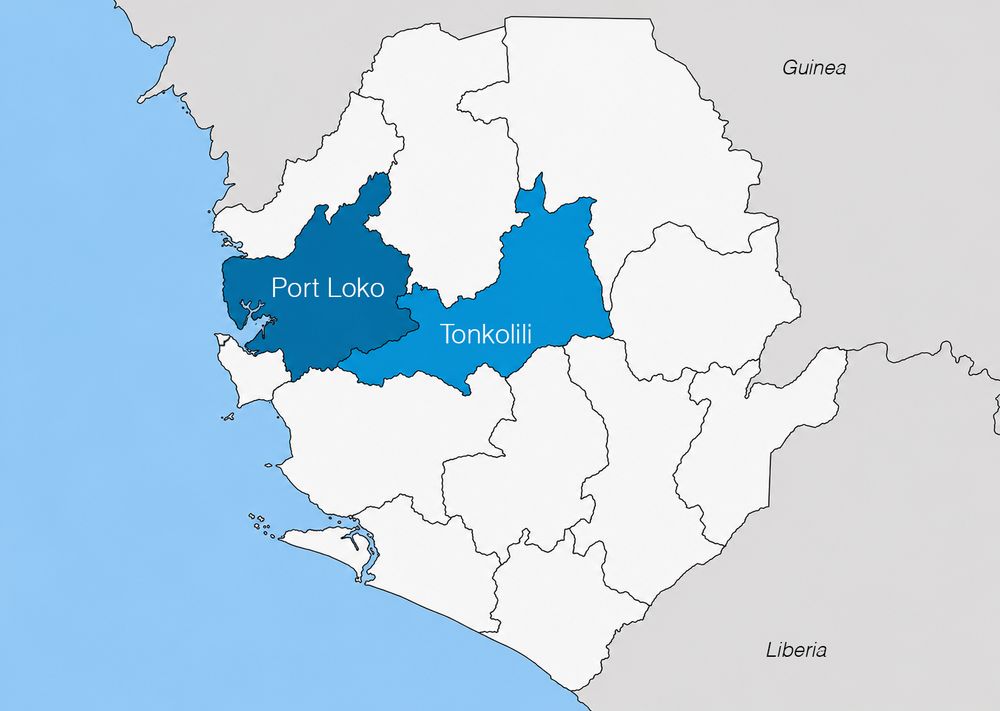
The carbon project "Reforestation of Degraded Lands in Sierra Leone" is situated in the Tonkolili and Port Loko Districts of Sierra Leone and encompasses roughly 10,000 hectares of commercial forestry plantations, of which roughly 5,000 hectares are eligible for the generation of carbon credits.
Communities report loss of land and livelihoods
The research found a significant disconnect between official project documentation, third-party project audits, and the experiences reported by members of the six communities visited.
-During the fieldwork, we saw a clear gap between formal consultation and meaningful community participation, particularly for women. Communities need to understand and genuinely consent to decisions affecting their land, says Abass John Kamara, Deputy National Coordinator at Silnorf.
Members of the communities interviewed by Swedwatch and Silnorf said that there were limited consultations and negotiations with communities ahead of the land acquisition process. While project documentation describes the carbon project area as “degraded”, community members reported that some of the land had been actively used for subsistence farming and harvesting natural resources. Interviewees said that conversion of some areas into plantations had restricted their access to land and resources, which they associated with increased food insecurity and poverty. Many also said they were unaware of the duration of the land leases.
Residents of the six communities visited, as well as key informants and some local authorities, also said they were unaware that a carbon project existed on the land, believing the plantations were solely used for timber production. As one informant put it: “The money they will make is as a product of the plywood, poles, but they never told us they were making money from selling carbon.”
-Applicable carbon registration standards required project proponents to conduct local stakeholder consultations to inform communities and maximize participation. It is therefore concerning that some community members and key stakeholders remained unaware of the carbon project operating on these plantations, says Davide Maneschi.
Women reported being particularly affected. Women interviewed said they had lost access to resources such as fruit trees and firewood, while largely being excluded from consultations and lease payments, which were typically distributed to male elders.
Interviewed landowners also described the annual rent per hectare, (reportedly increasing to USD 17 in 2024 from USD 12*) as insufficient to compensate for lost subsistence income or support large families. As one landowner said: “We used the land to cultivate crops that we use for our families and welfare. But we don’t have access to that land anymore.”
-For the communities we visited, land is much more than property; it is their source of food, income, and survival. Losing access to land and natural resources has therefore had direct consequences for their livelihoods, says Alhaji Amdu Bunduka, Head of Research and MEAL Manager at Silnorf.
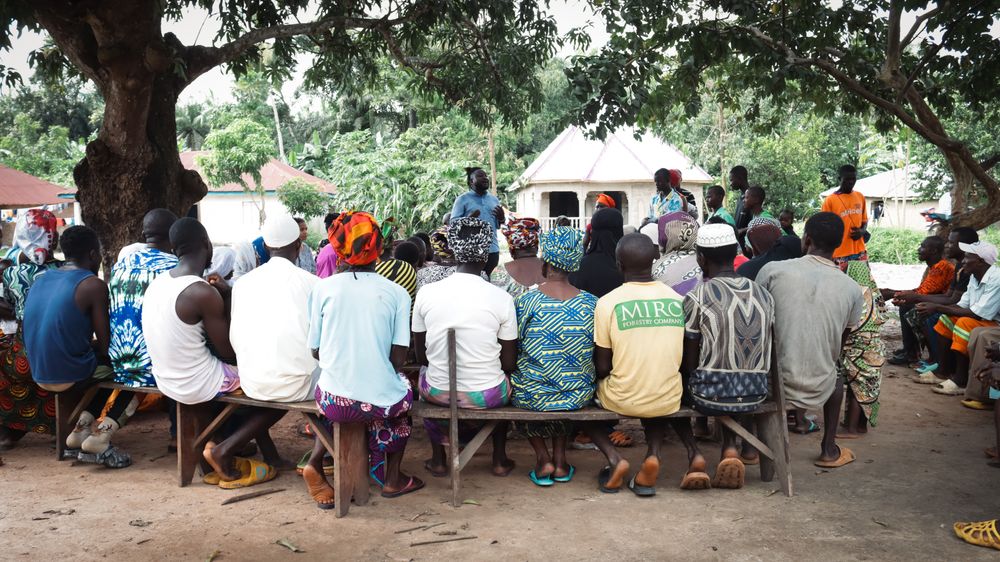
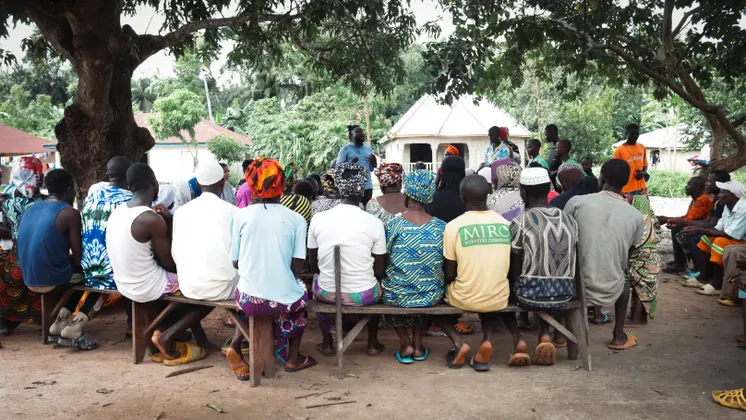
Community in Sierra Leone taking part in a discussion held by Swedwatch and Silnorf in October 2025 on carbon credits and Miro’s operations in the area.
Questions over how carbon revenues benefit communities
The report also raises concerns about how the revenues generated by carbon credits benefit local communities.
In 2024, Miro reported USD 6.7 million in revenues from carbon credit sales across its two African projects, and project documents state that a sharing agreement providing 5% of net profits to a community fund was enclosed to the land lease. However, according to landowners interviewed for the report, communities have not yet received a share of the proceeds from carbon credit sales, and there is currently no functioning mechanism for sharing operational revenues.
In communication with Swedwatch, Miro explained that the company had not yet made a net profit, which is also confirmed by the company’s financial disclosure. Miro also has stated that it is committed to reviewing a revenue-based benefit-sharing mechanism from January 2027 as a possible alternative to the profit-sharing model.
-Carbon projects are often portrayed as an opportunity to unlock climate finance and ultimately provide social and economic benefits to local communities in low-income countries. However, this is unlikely to happen in the absence of clear regulatory frameworks mandating revenue and benefit sharing between project developers, governments, and communities. When communities report losing access to land and livelihoods while having little insight into the revenues generated, it points to a fundamental imbalance in power and access to information that carbon market actors, and regulators, need to address, says Davide Maneschi.
Project actors dispute findings
The report is based on field research conducted in October 2025, by Silnorf and Swedwatch, involving 289 participants from six villages adjacent to the plantations, combined with a review of project documentation. Swedwatch and Silnorf shared the key findings with Miro, South Pole and Verra before publication and invited them to comment.
Miro and South Pole dispute the report’s characterisation of the impacts. They maintain that their operations comply with applicable local laws, international sustainability standards and validated methodologies, and point to independent third-party certification, including by the Forest Stewardship Council (FSC). They also raised concerns about the methodology of the study, arguing that the research relies primarily on verbal accounts from a limited number of communities.
Miro nonetheless expressed the intention to investigate and engage about the issues raised in the report and improve their practices when needed. South Pole also communicated that it has established third-party assured internal processes through which to perform a more stringent screening of projects, beyond what the carbon standards themselves require.
All three actors were invited to submit statements ahead of publication. Their statements are available on Swedwatch’s website. Verra has not provided a statement at the time of publication.
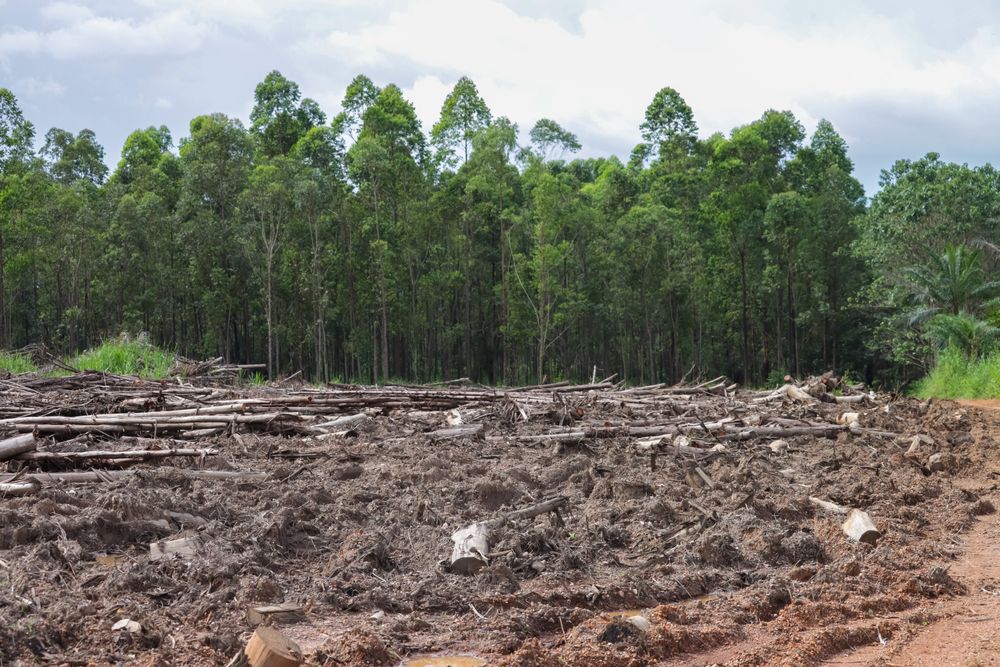
Miro has been operating in Sierra Leone since 2012.
True and inclusive benefit sharing and stronger safeguards needed in the voluntary carbon market
The report acknowledges reported benefits of the project, including tree-cover restoration, improvements to the local micro-climate and employment opportunities. However, these benefits were unevenly experienced and contested by community members interviewed, many of whom also reported negative impacts on their rights and livelihoods.
Under the UN Guiding Principles on Business and Human Rights, positive contributions do not offset a company’s responsibility to respect human rights throughout its operations.
Recommendations in short
The report calls on Miro to renegotiate land leases in line with Sierra Leone’s 2022 Customary Land Rights Act, implement its new revenue-based benefit-sharing model and ensure women’s participation in land governance.
It calls on South Pole and Verra to strengthen human rights due diligence and oversight of auditors and validation and verification bodies, and to engage meaningfully with affected communities to ensure social safeguards work in practice.
The Government of Sierra Leone should ensure that its carbon market policies protect customary land rights and human rights, enforce effective grievance mechanisms and require greater transparency from investors.
More broadly, the report concludes that carbon market actors cannot rely solely on third-party certification and audits to manage projects’ social impacts. Stronger human rights due diligence, community ownership, meaningful community participation, transparent benefit-sharing and independent, community-driven oversight are needed to ensure that carbon credit projects do not come at the expense of local rights and livelihoods.
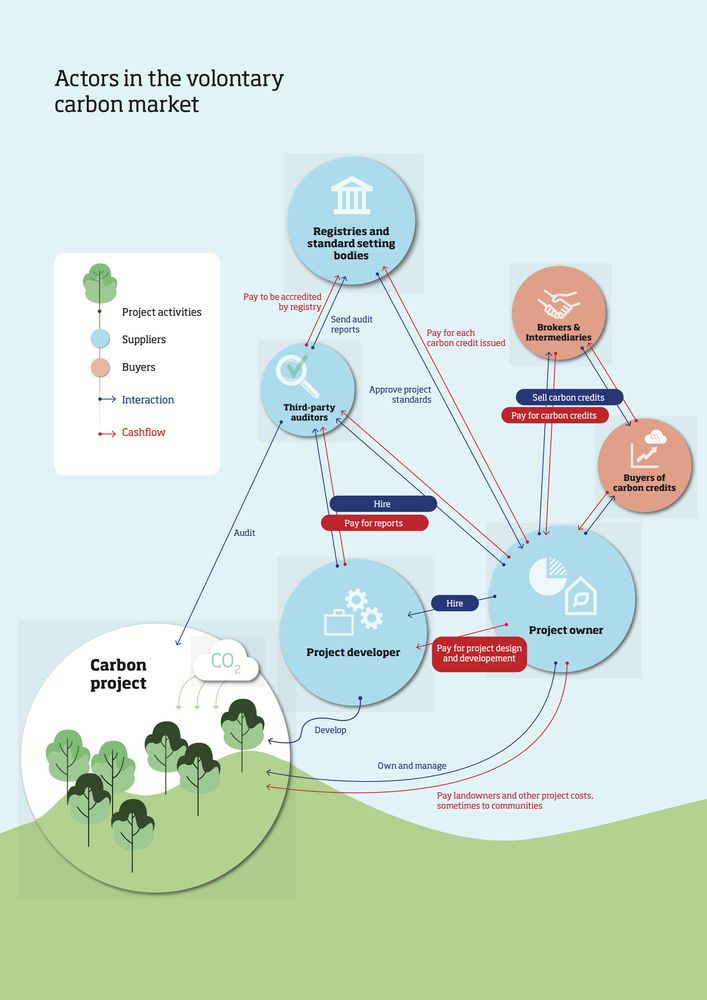
The different actors within carbon projects play distinct roles throughout the project lifecycle: from initial planning and design to the monitoring and verification of climate impacts, and finally, through the issuance, sale, and claiming of carbon credits. This report focus on the project owner, the project developer, and the carbon crediting program under which the project is registered and issuing credits.
FACT BOX:
Miro’s plantations in Sierra Leone were established for the production of commercial timber. Miro has been present in Sierra Leone since 2012 and registered its greenhouse gas reduction project in 2021, with a crediting period start date of 2016. The plantations are intended to generate CO₂ credits thanks to the carbon stored in standing trees and in the timber and wood products. The goal of this kind of carbon projects is to remove CO₂ from the atmosphere to balance out an emitter’s real-world emissions on paper. Land-based carbon projects require dedicated land for sequestration and conservation, which can conflict with existing agricultural and forestry uses. Spending on carbon credits reached a volume of over one billion US dollars in 2025, according to Sylvera’s State of Carbon Credits.
The full report is attached.
Statements from Miro and South Pole can be found here: https://swedwatch.org/ul/carbon-credits-land-rights-and-community-impacts-in-sierra-leone/
*An earlier version of this press release stated that landowners were paid USD 12 per hectare. Since 2024, landowners have been paid USD 17 per hectare. This figure was corrected in both the report and the press release on 10 September 2026.
Topics
Safeguarding human rights and environment in business
Swedwatch is an independent, non-profit research organization dedicated to promoting responsible business practices and empowering rights holders. We achieve this by exposing the human and environmental impacts of unsustainable business operations and fostering collaboration between stakeholders to drive meaningful change.