Blog post —
Reflections on a decision that reaches far beyond one organisation
Terminating funding to organisations like Swedwatch – whose work is to scrutinise corporate behaviour, expose harmful practices and push for accountability – does not happen in a vacuum. It is part of a wider geopolitical trend.
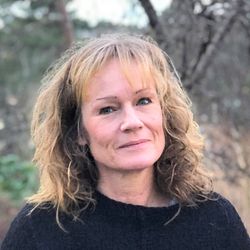
By Alice Blondel, Director at Swedwatch
At the end of 2025, the Swedish International Development Cooperation Agency (Sida) informed us that our core funding agreement will be terminated. The decision comes at a moment when corporate accountability for human rights and the environment, the very heart of Swedwatch’s work, is more urgent than ever.
The stated reason for the withdrawal of funds was that Swedwatch’s work is no longer considered sufficiently aligned with or indeed deemed relevant for the government’s new strategy on sustainable growth and green transition.
For 20 years, Swedwatch has been Sweden’s largest independent organisation dedicated to business, human rights and environmental justice, known for conducting in-country research together with rights holders and for bringing together companies, civil society and authorities in constructive dialogue. Ending funding for this work sends a troubling signal: that Sida, and by extension the Swedish government, is no longer interested in independent oversight on how companies affect people and the planet.
Global decline in human rights funding
The withdrawal of funding to Swedwatch must be seen as part of a broader global story of diminishing government funds for human rights protection. If you compare aid budgets in 2023 to 2026, The Human Rights Funders Network projects that Official Development Assistance (ODA) for human rights will decline by up to $1.9 billion USD in 2026 compared to 2023.
Swedwatch´s report this year, Overdue Diligence, demonstrated how limited funding was fundamentally undermining the ability of workers and communities to protect their human rights and environment. This was based on data from 2020, the latest available year. Since then, according to the Human Rights Funders Network, human rights ODA has been cut from $7.8 billion (2020) to $4.4 billion (projected for 2026).
Sweden: The biggest per capita cutter of aid
When you compare aid totals from across the years from 2020 to projected cuts in 2027 via Donor Tracker, Sweden has been the largest per capita slasher of aid in the world (or second largest cutter if comparing to Gross National Income, GNI). This has been marked in recent years by Sweden’s aid through trade agenda, shifting its development focus to private sector promotion. The agenda aims to align private capital and core business activities with development priorities. However, subsequent cuts to aid budgets will leave those most vulnerable to abuse left without support to raise their voices.
A rapidly shrinking global civic space
The need for independent civil society capable of standing up to corporate interests and abuses of power is stronger than ever. Attacks on defenders speaking up about business related harms are rampant, and civic space is declining, reducing the likelihood that stories of business-related human rights abuses and environmental harm will ever see the light of day.
Business and Human Rights Centre recorded 6,400 attacks against people who voiced concerns about business-related risks or harms between 2015 and 2024.
The report, People Power Under Attack 2025 from Civicus, finds that people in 83 countries and territories now live with their freedoms routinely denied, compared to 67 in 2020.
A 2025 report from the United Nations Special Rapporteur Environmental Defenders under the Aarhus Convention documented growing threats faced by defenders including online harassment in media, legal threats from SLAPPS, arbitrary arrests, physical attacks, and administrative penalties.
It is harder and harder for stories of harm to be heard at all, let alone to reach remedy.
Without civil society funding, the most vulnerable will suffer the most
As the small sliver of funding supporting independent civil society and media to document abuses dwindles even responsible companies will struggle to identify harms within their value chains, particularly for harms to the most vulnerable who have the least access to raise their voices.
When oversight disappears, impunity grows
And the cost is carried not only by rights-holders in the Global South, but by every society that relies on companies to behave responsibly, pay their fair share and respect the people and environments they profit from.
Change rarely starts from the top, it begins with those who refuse to stay silent. As funding is withdrawn and civic space contracts, our collective responsibility grows stronger.
Swedwatch’s work will continue, powered by partnerships, persistence, and the belief that transparency and accountability are the cornerstones of sustainable societies. We will do so with fewer resources, but with the same independence and conviction that have guided us for two decades. The choice facing Sweden now is not only about aid budgets; it is about the kind of society we want to be – one that protects human rights and transparency, or one that turns away.